Dog Welfare
Puppy Mills: What They Do to a Dog and How to Stop Them
Puppy mills do not survive because of a legal loophole. They survive because puppies sell.
What Is a Puppy Mill?
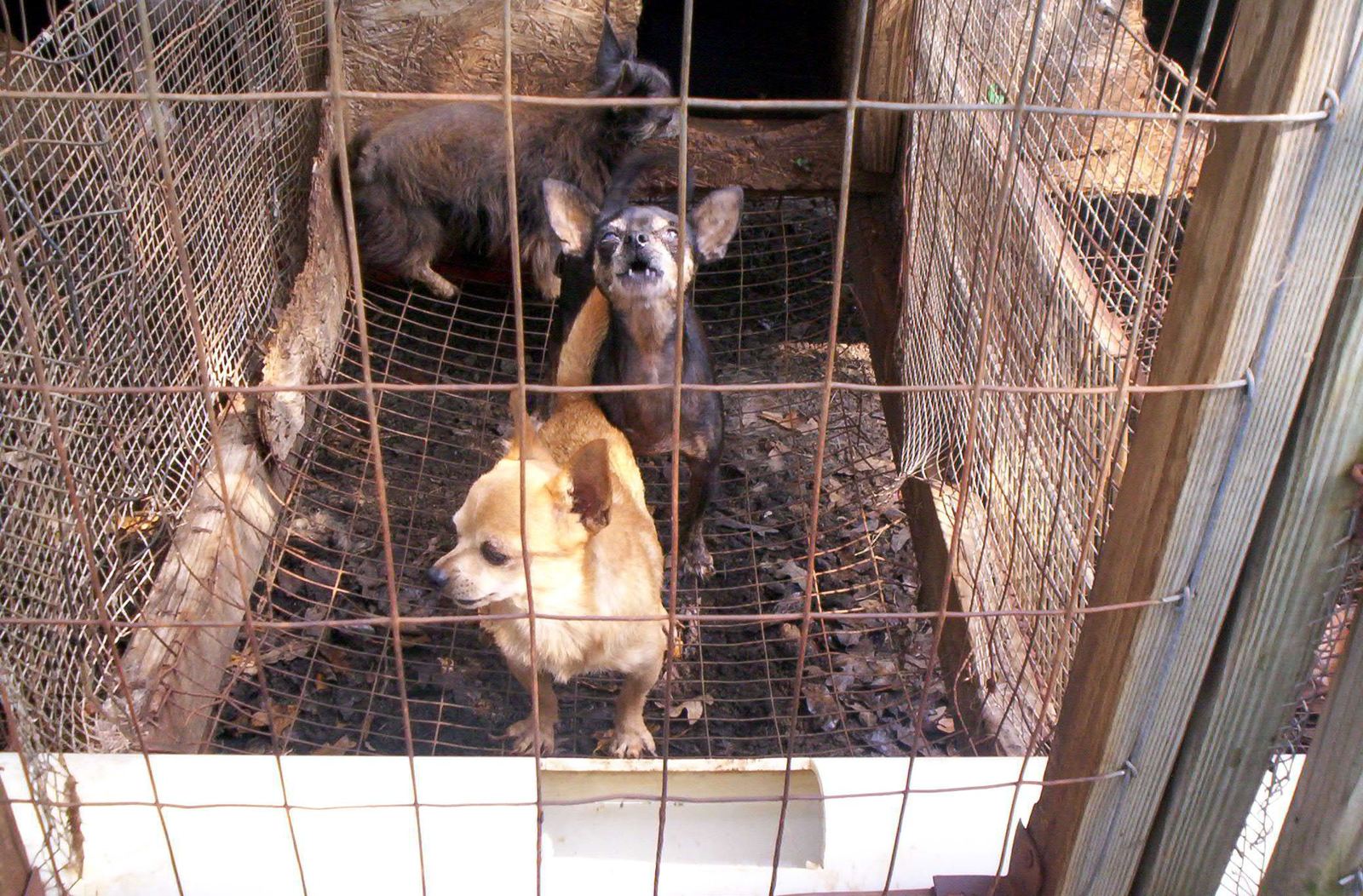
A puppy mill is a high-volume breeding operation that produces puppies for profit in conditions that fail to meet the animals' physical and psychological needs. Dogs are commonly kept in cages, bred repeatedly, and given little veterinary care, human contact, or room to move.
There is a reason pet stores across America do not advertise where their puppies come from. If they did, no one would buy them.
The Humane Society's annual investigations have documented wire flooring, accumulated feces, ammonia in the air, no ventilation, untreated illness, matted coats, and dead animals on the premises. Many of these facilities are licensed and inspected. That is the part people find hardest to believe.
These operations are not run by people who like dogs. They are run by people who like margin. The dogs are inventory. The mothers are equipment, bred until they stop producing.
What Do Puppy Mills Do to a Dog's Behavior?
This is my part of the conversation, and it is the part most articles skip.
Researchers at the University of Pennsylvania School of Veterinary Medicine ran the study that answers this directly. They compared 413 dogs bought as puppies from pet stores against 5,657 dogs obtained from small-scale private breeders, using a validated behavioral assessment.
The pet store dogs scored worse on 12 of 14 behavioral measures. They scored better on none of them.
What showed up: more aggression toward their own family members, more aggression toward unfamiliar people and other dogs, more fear of other dogs and of ordinary life events, more separation-related problems, and more house soiling. A later review of the research found the most consistent finding across every study was increased aggression, along with heightened sensitivity to touch.
The researchers were direct about the conclusion. Until the causes are identified and fixed, they could not recommend that anyone get a puppy from a pet store.
I want to be honest about what that research does and does not prove. These are correlational studies. They show a strong and repeated pattern, not a mechanism. But I have spent nearly forty years with the dogs on the receiving end of that pattern, and the findings match what walks through my door.
I have worked with these dogs directly, coming straight out of the situations that produced them.
What I Have Seen Firsthand
In 2018, a puppy mill in Habersham County, Georgia was shut down. Roughly four hundred animals came out of it. I helped psychologically rehabilitate several of those dogs.
I have also worked another large bust here in Atlanta, and I was part of the rehabilitation effort for three of the dogs seized from Michael Vick's Bad Newz Kennels.
Dogfighting and mill breeding are not the same crime. But the dogs arrive with a version of the same problem. A nervous system built by an environment that never gave them a reason to believe people were safe or that the world was predictable.
What the research reports as a score on a behavioral scale, I have watched come through a gate. The numbers are conservative compared to what these dogs are actually carrying.
They also recover further than most people expect. Not all of them, and not on anyone's schedule. But further than the assumptions most of these dogs are written off with.
Why Does It Affect Them So Deeply?
A puppy's early weeks set how its nervous system handles novelty, handling, and recovery from stress. There is a window where a puppy is unusually open to learning that the world is safe. The same window makes it unusually vulnerable to learning the opposite.
A puppy raised without normal human contact, varied surfaces, sound, or space comes out the far side of that window with the wrong conclusions already installed.
This is why people who adopt a mill dog are so often blindsided. They expected that safety would fix it. Safety is necessary. It is not sufficient.
What I see in these dogs is a nervous system that never learned what normal feels like. A doorway is a threat. A hand reaching down is a threat. Grass is a threat, because they have never stood on it. They are not being stubborn and they are not being dramatic. They are reading the world with the only information they were ever given.
The dog was never really the problem. The dog is the result.
Carl was one of those dogs. Small, and carrying everything a mill teaches a dog to carry. He went on to a home with a dad who gave him the life he should have had from the start.
His story is on video further down this page. It shows the shape of this work better than a description would.
What About the Physical Health?
Mill puppies frequently arrive with problems a buyer discovers within days. Parasites. Congenital defects. Conditions that trace back to breeding stock that was never health tested, because testing costs money and reduces the number of females you can breed.
There is also a documented public health dimension. Between January 2016 and February 2018, the Centers for Disease Control investigated an outbreak of multidrug-resistant Campylobacter across 18 states. 118 people were infected and 26 were hospitalized. The CDC traced the source to pet store puppies, across a national chain and several other retailers.
The strain resisted the antibiotics normally used to treat it. Investigators pointed at routine antibiotic use in the commercial dog industry as the likely reason.
That is the part that should end the argument for anyone still weighing it. These conditions do not stay inside the kennel.
Which Pet Stores Are the Problem?
Both kinds, and people underestimate the small ones.
The large chains get the headlines because they are large enough to investigate. But the supply chain underneath them is the same one feeding independent shops. Puppies move from high-volume breeders to brokers, and brokers sell to whoever is buying. A single broker can move hundreds of puppies at a time from dozens of breeders, which is also why outbreaks are so hard to trace back to a source.
A small local store with a friendly owner and six puppies in the window is not automatically better than a chain. It is often buying from the same brokers, just in smaller volume.
The question is never how big the store is. The question is whether they will tell you the name of the breeder, let you contact that breeder directly, and show you health testing on the parents. A store that cannot answer those three things is not a store you want to buy a dog from, no matter how it looks from the sidewalk.
How Do You Stop Puppy Mills?
Do not financially support them.
These operations still exist despite protest from every major animal welfare institution, including the ASPCA and the Humane Society. The only reason puppy mills continue to thrive is that there is money in it. Keeping your dollars out of their pockets is the thing that actually works, and it does not require a single law to change.
Where Should You Get a Dog Instead?
Adopt, don't shop. That is where I start, and rescue is where most people should look first. Rescues can be breed-specific or take all shapes and sizes. What they have in common is that their purpose is the dog's wellbeing, not the sale.
I am not against breeders. I am against bad ones. There are ethical breeders doing this properly, testing genetics and health, breeding carefully, standing behind their dogs for life. They exist and they are worth finding.
But you have to do the work to find them, and most people do not know what to ask.
How Do You Vet a Breeder?
Ask for veterinary references, and then actually call them. This one question eliminates most bad actors, because a breeder with something to hide will not give you a vet who will talk to you.
Ask to see genetic and health testing results for both parents, not a general assurance that the line is healthy. Ask what the results mean.
Meet the mother, in the place the puppies were actually raised. Not a front room the puppies were carried into.
Ask how many litters that female has had, and how old she is.
Ask whether they will take the dog back at any point in its life. The answer tells you whether they see this as a relationship or a transaction.
A breeder doing this properly will ask you as many questions as you ask them. If the purchase feels easy, that is information.
What About Facebook Marketplace and Craigslist?
Buying a puppy through online classifieds can fund the same system as buying one in a store.
These listings require no license, no health testing, and no accountability of any kind. You cannot verify where the puppy came from, you usually never see the mother, and the seller is gone the moment the money changes hands. Meeting in a parking lot is not a red flag. It is the whole flag.
Can a Puppy Mill Dog Recover?
Many improve a great deal with time, calm handling, and consistency. Recovery is measured in months rather than weeks, and progress is rarely a straight line. What changes fastest is the dog's ability to settle. What changes slowest is usually trust in new people.
Three things matter more than any technique.
Patience. You are not training a behavior out. You are giving a nervous system enough calm repetition to build a different expectation. That takes as long as it takes.
Persistence. Setbacks are not failures. A dog that regressed after a good week has not lost the progress. It hit something it was not ready for yet.
Consistency. This is the one people underestimate. A mill dog has no reason to believe the world is predictable. Every inconsistent day costs more than it would with a dog who started out secure.
Firm, fun, fair. Those are terms these dogs can work with.
If your dog has a bite history, or you have children or elderly family in the home, get qualified in-person help. This is not a situation to work through alone from an article.
What Happens to the Dogs Who Are Rescued?
When a mill is shut down, the dogs do not simply go to homes. Most need months of rehabilitation first, and most of the rescues taking them on are doing it with volunteers and donations.
This is the work Dog Corps exists for. It is our nonprofit, focused on dog welfare, spay and neuter, and humane education, including street dogs and dogs pulled out of mill situations.
Watch What a 400-Animal Bust Looks Like
Julie Edwards was there when the Habersham County mill was shut down. In this conversation she describes what they found and what the dogs had been living in.
Carl's Story
One of the dogs from that mill, and where he ended up.
More rehabilitation cases on the Dog Psychology 101 channel (opens in a new tab)
The Short Version
Puppy mills are a demand problem wearing a supply costume. Every puppy bought from one funds the next litter. Every puppy adopted instead does not.
And if you are the person who brought one of these dogs home and you are struggling: you are not failing. You are working with a dog whose first weeks taught it the wrong things about the world. That is a slower job than most people are told. It is also, in my experience, one of the most complete changes you will ever watch a dog make.
Dog lessons are life lessons.
Common Questions About Puppy Mills
What is a puppy mill?
A puppy mill is a high-volume breeding operation that produces puppies for profit in conditions that fail to meet the animals' physical and psychological needs. Dogs are commonly kept in cages, bred repeatedly, and given little veterinary care, human contact, or room to move.
Do puppy mill dogs have more behavior problems?
Research says yes. A University of Pennsylvania study compared 413 pet store puppies against 5,657 dogs from small private breeders and found the pet store dogs scored worse on 12 of 14 behavioral measures, and better on none. The most consistent finding across studies is increased aggression, alongside greater fear and separation problems.
Are pet store puppies from puppy mills?
Not every one, but responsible breeders do not sell through retail channels, because they want to meet the people taking their puppies home. If a store will not tell you exactly which breeder a puppy came from and let you contact them, treat that as your answer.
Are small pet stores better than big chains?
Not automatically. Both often buy from the same brokers, who move puppies from high-volume breeders to whoever is purchasing. A small store simply buys in smaller volume. The question is not the size of the store. It is whether they will name the breeder, let you contact that breeder, and show you health testing on the parents.
Can a puppy mill dog recover?
Many improve a great deal with time, calm handling, and consistency. Recovery is measured in months rather than weeks and progress is rarely a straight line. What changes fastest is the dog's ability to settle. What changes slowest is usually trust in new people.
How do I find an ethical breeder?
Ask for veterinary references and call them. Ask to see genetic and health testing results for both parents. Meet the mother in the place the puppies were actually raised. Ask how many litters that female has had and whether the breeder will take the dog back at any point in its life. A breeder doing this properly will ask you as many questions as you ask them.
Is it safe to buy a puppy from Facebook Marketplace or Craigslist?
Online classified listings are a common outlet for mill-bred and backyard-bred puppies because they require no licensing, no health testing, and no accountability. There is no way to verify where the puppy came from, and the seller disappears the moment money changes hands.
How do you stop puppy mills?
Stop paying them. Puppy mills exist because puppies sell. Adopting from a rescue, or buying only from a breeder who will show you the mother, the premises, and the health testing, removes the demand the entire system depends on.
Sources and Further Reading
ASPCA on puppy mills (opens in a new tab)
The Humane Society's annual Horrible Hundred investigation (opens in a new tab)
University of Pennsylvania study on pet store puppy behavior (opens in a new tab)
CDC findings on the multidrug-resistant Campylobacter outbreak (opens in a new tab)