Blog
Separation Anxiety in Dogs: 5 Everyday Habits That May Be Making It Worse
Why your dog’s morning routine, your behavior, and teaching independence can make a world of difference
By Angie Woods, Dog Psychology 101
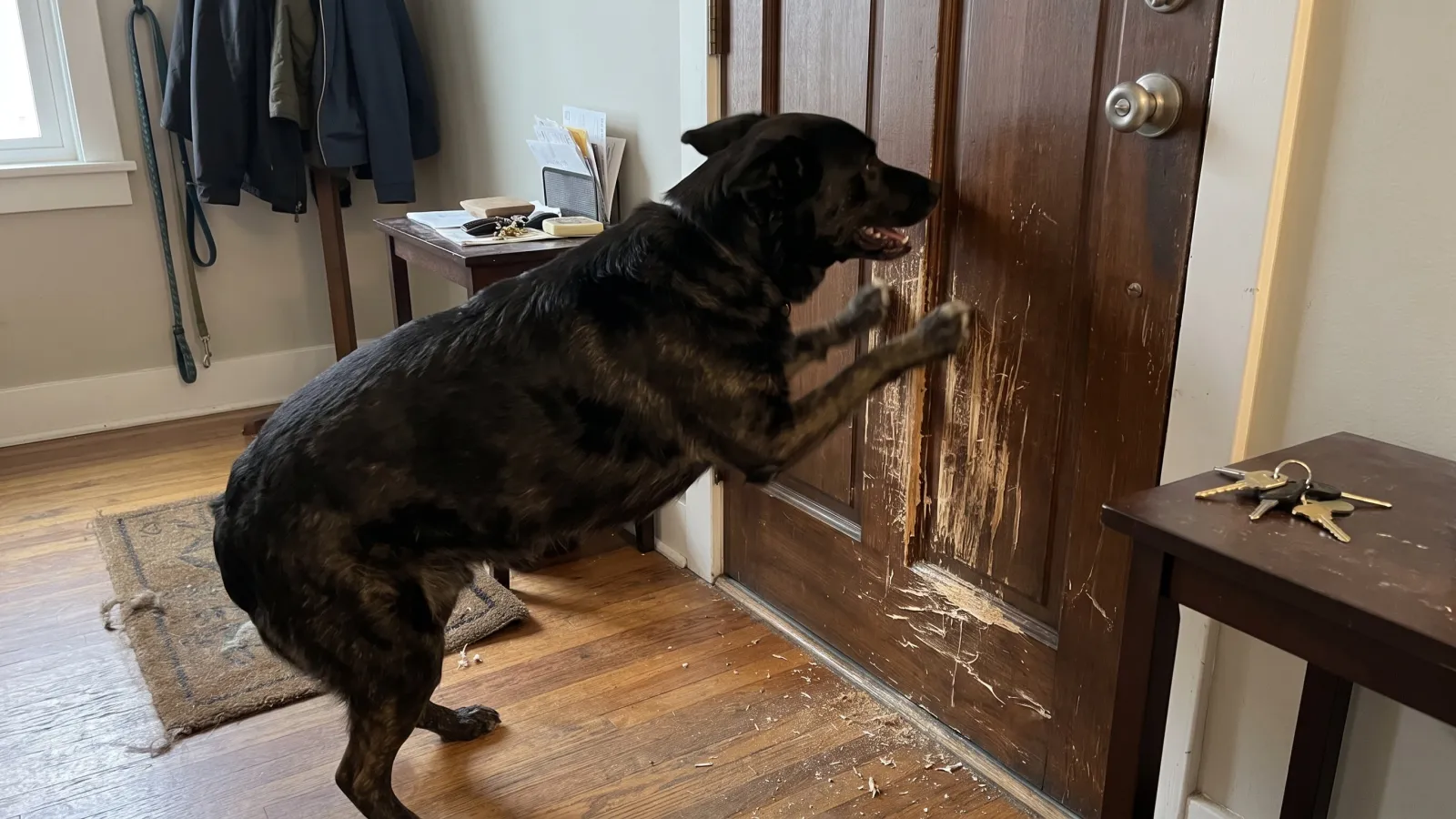
Does your dog panic when you leave the house? Bark, whine, pace, destroy things, or follow you everywhere you go?
Many people immediately label these behaviors as separation anxiety. But before we can change the behavior, we need to understand what’s happening in the dog’s mind.
Here’s something I want every dog owner to think about.
What if some of the things you’re doing out of love are actually making it harder for your dog to feel secure when you’re gone?
After nearly 40 years of working with dogs, I’ve seen firsthand how much our everyday behavior, routines, expectations, and emotional energy influence our dogs.
People often want a quick fix. A pill. A special product. Some kind of magic fairy dust that will make the problem disappear.
But lasting behavioral change usually requires something much more important: changing the way we live with our dogs.
Dogs Are Social Animals. We Have to Teach Them How to Live in Our World.
Dogs are naturally social animals. They form relationships, seek companionship, and often prefer being near members of their social group.
In a stable group environment, dogs frequently spend much of their time together. But domestic dogs can also spend time apart, and their natural social relationships are more flexible than many people realize.
Now think about the world we’ve created for our dogs.
We bring them into our homes, make them part of our families, give them constant companionship when we’re home, and then suddenly expect them to be perfectly content when we leave for eight or ten hours.
Some dogs adapt to this lifestyle quite easily.
Others struggle tremendously.
We’re asking an inherently social animal to adjust to a very human way of living. And that’s where our responsibility begins.
We must teach our dogs how to function comfortably and confidently within our world. That doesn’t happen simply because we love them. It happens through patience, persistence, consistency, appropriate exercise, boundaries, and learning to relax.
Our behavior plays an enormous role in shaping theirs.
First, Understand What Separation Anxiety Really Is
True separation anxiety is emotional distress associated with being separated from an attachment figure.
Dogs may bark, howl, pace, drool excessively, become destructive, have accidents, or attempt to escape.
But not every dog exhibiting these behaviors has clinical separation anxiety.
Some dogs are bored or understimulated. Others haven’t learned to settle independently. Some react to sounds outside the home, and others experience distress specifically related to confinement.
There can also be underlying medical, genetic, and temperament-related factors.
Recognizing the difference matters. We need to understand the cause of the behavior rather than simply trying to stop the symptoms.
Five Everyday Habits That Can Make Separation More Difficult
1. Not Exercising Your Dog Appropriately, Especially in the Morning
This is one of the first things I examine when working with a dog experiencing behavioral problems.
How much exercise is the dog getting?
And just as importantly, WHEN is the dog getting it?
Many people tell me, “Oh, I walk my dog every evening when I get home from work.”
That’s wonderful, but what about the entire day before that? Your dog has spent hours inside, sitting on all that energy, waiting for something to happen.
For some dogs, that unused energy contributes to restlessness, frustration, excessive barking, and difficulty settling. Then we expect them to remain calm while we disappear for the day.
Think about it. If you’re going to leave your dog home during the day, why are you waiting until nighttime to meet their exercise needs?
The morning is an incredibly valuable time to provide appropriate physical activity and mental stimulation.
And I want to stress the word APPROPRIATE.
A young, healthy, high-energy dog has very different needs from a senior dog, a small companion breed, or a dog with physical limitations. Exercise should always be matched to your dog’s age, energy level, health, and physical condition.
A leisurely ten-minute stroll might be appropriate for one dog and nowhere near enough for another.
Dogs also need opportunities to experience the world through their senses. Walking, sniffing, exploring, and moving through different environments provide far more than an opportunity to use the bathroom. They provide valuable physical and mental engagement.
A dog whose needs have been appropriately met is often in a much better position to rest comfortably afterward.
Exercise alone won’t cure true separation anxiety. But failing to meet your dog’s daily activity needs certainly doesn’t help them develop a healthy routine.
2. Allowing Your Dog to Follow You Incessantly
Does your dog follow you into every single room?
You go to the kitchen. There they are.
You go to the bathroom. There they are.
You walk into the bedroom. Here they come again.
Many people think this is adorable. But I want you to consider something.
If your dog never learns to be comfortable without you right beside them, how can you expect them to suddenly be confident when you leave the house?
Following a person is normal dog behavior and doesn’t automatically indicate anxiety. However, if your dog becomes distressed whenever they cannot follow you, it’s time to begin teaching some independence.
Teach your dog to remain comfortably on their bed or in a designated resting place while you move about the house. You should be able to walk into another room without your dog feeling obligated to follow.
Start with short, manageable periods and gradually build their confidence.
This is not punishment. It’s not withholding love. It’s teaching your dog an important life skill.
You can have a wonderful, affectionate relationship with your dog while still establishing boundaries.
Independence and companionship are not opposites. A confident dog can enjoy both.
3. Creating Too Much Excitement When You Come Home
We’ve all seen it.
You arrive home, open the door, and your dog practically explodes with excitement. You immediately respond in a high-pitched voice.
“HI, BABY! MOMMY’S HOME! DID YOU MISS ME?”
Now everyone is excited.
Dogs respond to our movements, voices, body language, and emotional signals. When every homecoming becomes a huge celebration, we’re creating another highly stimulating event around our arrivals.
Now, this doesn’t mean excited greetings cause clinical separation anxiety. That connection hasn’t been established. But for dogs who already struggle with emotional regulation, teaching calmer arrivals can be useful.
- Come inside naturally.
- Put your things away.
- Give your dog an opportunity to settle.
- Then offer calm affection.
You don’t have to ignore your dog. You simply don’t need to turn your arrival into a party.
Coming and going should be normal parts of everyday life.
4. Making a Big Production Out of Leaving
Now let’s talk about what happens when you leave.
“Mommy’s going to work!”
“Be a good boy!”
“I’ll be back soon!”
“Don’t worry, baby!”
All accompanied by extra affection, emotional voices, and a change in your normal behavior.
And that guilt in your voice? Feelings of guilt translate to the dog. To them, something is wrong here.
Your dog doesn’t understand your promise to return in a few hours. But they absolutely can learn to recognize your departure routine.
Your shoes, keys, purse, and other behaviors become signals that something is about to happen. For a dog already anxious about being left, those signals may trigger distress before you even open the door.
Why add more excitement to an already sensitive moment?
Make your departure uneventful.
- No elaborate goodbye ceremony.
- No emotionally charged conversation.
- No unnecessary excitement.
Simply prepare to leave calmly and naturally. Your dog should learn that people coming and going is a normal part of everyday life.
5. Leaving Your Dog in an Excited or Restless State
This is one of the biggest opportunities owners miss.
Your dog has just been running around, barking, jumping, or following your every move. You grab your keys, tell them goodbye, and walk out.
You’ve left them in a heightened state of arousal.
Now consider the alternative. Your dog has had an appropriate morning walk, returned home, cooled down, eaten breakfast, and settled comfortably into a resting place.
Which dog is better prepared to relax?
This is why I emphasize teaching a dog to become genuinely calm before leaving. And I mean calm, not simply physically still. A dog can be lying down while remaining emotionally anxious.
Look at the whole dog.
- Are they breathing comfortably?
- Is their body relaxed?
- Are they resting naturally, or are they tense, alert, and watching every move you make?
We want genuine relaxation. Not just obedience.
My Morning Recipe for a More Relaxed Dog
This is one of the simplest and most valuable daily routines I recommend. Especially for people who work outside the home.
Step 1: Start the Morning With an Appropriate Walk
Before you leave for work, take your dog for a meaningful walk. Not simply a quick bathroom break.
A proper walk matched to your dog’s age, health, physical abilities, and energy level. For some dogs, that’s a gentle stroll. For others, it’s a much longer, more engaging walk.
The purpose is to appropriately meet their physical and mental needs early in the day. Not late that evening after they’ve spent hours restless and waiting.
And remember, the goal is not to exercise your dog to the point of exhaustion. It’s to provide an appropriate outlet for their natural energy.
Step 2: Come Home and Cool Down
After your walk, bring your dog inside and allow them to recover.
Let their breathing return to normal. Let their body cool down. Keep the environment peaceful.
Don’t immediately start another highly stimulating activity. We are beginning the transition from movement to rest.
Step 3: Feed Your Dog
Once your dog has cooled down sufficiently, it’s time for breakfast.
For dogs that have exercised vigorously, especially large, deep-chested breeds at risk of bloat, allow an appropriate rest period before feeding.
Now look at the natural rhythm we’re creating.
Activity. Recovery. Food. Rest.
After having their physical and sensory needs met, many dogs are naturally more inclined to settle down. We’ve provided a much better opportunity for relaxation than we would have by simply rolling out of bed, rushing around, and disappearing out the door.
Step 4: Allow Natural Rest
After breakfast, let your dog settle into a comfortable resting place.
No constant stimulation. No need for continuous attention. No excitement just because you’re preparing to leave.
Let your dog experience the peaceful part of the day. Teach them that nothing needs to happen right now.
This is especially important for dogs accustomed to constantly interacting with their humans. Learning to do nothing is a valuable skill.
Step 5: Leave Calmly, But Don’t Let Your Dog Follow You Around
Here’s where your everyday practice becomes important.
Your dog should already be learning to remain comfortably in their designated resting place while you move about. If you get up and your dog immediately gets up to follow, calmly redirect them back to their place. Ask them to stay. Move about naturally.
You shouldn’t have to stand in front of them to keep them there. The goal is for your dog to understand that they can remain in their resting place even when you’re moving around the house.
But pay attention to their emotional state. If they’re repeatedly getting up, becoming tense, or showing signs of distress, you may be moving too quickly. Make the exercise easier, practice with shorter distances, and help them succeed.
Don’t turn the interaction into a confrontation.
Once your dog is genuinely comfortable and relaxed, you can practice brief departures, gradually increasing the time away as they demonstrate they can handle it.
For dogs with severe separation distress, start with very short, carefully managed departures rather than immediately expecting them to tolerate an entire workday.
We are teaching independence and relaxation, not forcing a dog to endure panic.
What About the Crate? Make It a Den, Not a Cage.
I want to address something that is extremely important. Crate training.
A properly introduced crate can become a comfortable, familiar resting place. But there’s a tremendous difference between a dog who feels safe in a crate and a dog who simply has no choice but to remain inside it.
It’s all about the dog’s emotional state.
Here’s how I approach teaching a dog to relax in their crate.
First, teach your dog to enter the crate willingly. Leave the door open. Teach them to settle inside. Teach them to stay while you stand nearby.
Then begin moving around. Walk a few steps away. Return. No talking or interacting, except to be sure they stay in the crate. Move about the room.
You should not have to stand directly in front of the crate door to keep your dog inside. The dog needs to learn that remaining in that resting place is expected and, more importantly, comfortable.
As your dog becomes more confident, gradually build the distance and duration.
Pay attention to the dog’s body language. Are they relaxed? Are they resting comfortably? Or are they staring at you, waiting anxiously for their next opportunity to escape?
Don’t confuse staying put with feeling calm.
Only when your dog is comfortable and relaxed should you begin introducing the closed door. And even then, start with very short periods, initially while you’re nearby. Close it gently. Observe your dog. Open it again before distress develops, and gradually build their comfort with confinement.
We have to build up the time that they can stay in the crate.
Not all dogs need a crate. But if a dog is destroying your house, a crate can be a useful tool.
The crate should represent safety and relaxation. Not isolation, frustration, or fear.
Think about the feeling your dog associates with the door closing. That’s what matters.
The physical crate isn’t what makes it a den. The dog’s sense of security is.
For more demonstrations, visit my YouTube channel, Dog Psychology 101, and look for my videos on crate anxiety and separation anxiety.
What if Your Dog’s Separation Anxiety Is Severe?
This is where understanding dog psychology becomes especially important.
I’ve spent decades working with dogs experiencing serious behavioral challenges, including fear, aggression, and anxiety.
And one of the first things I want owners to understand is that behavioral problems don’t always require a complicated solution. Sometimes, significant improvement begins with changing the dog’s daily lifestyle and the human behaviors influencing it.
We need to examine the entire picture.
- How much exercise is the dog getting?
- What does their morning look like?
- Are they being taught to settle independently?
- What happens when the owner moves from room to room?
- How does the human behave during departures and arrivals?
- Has the dog learned to rest comfortably in their own space?
And perhaps most importantly, is the dog experiencing genuine panic, or are we dealing with learned habits, overstimulation, frustration, or difficulty settling?
We need to understand those differences.
I’m a firm believer that we should look at behavior, environment, routine, and the human-dog relationship rather than immediately searching for a magic pill.
Medication doesn’t teach a dog how to be comfortable alone. That requires behavioral work.
Medication should not be the first option. Too many dogs are on drugs they don’t need, just like people. It’s not typically a brain chemistry issue. It’s a relationship issue.
Here’s my personal experience. I interviewed every dog that arrived at my campus already on Prozac, the most common medication I saw. In 98 or 99 out of 100, I saw no benefit. But occasionally, there is a marked difference.
At the same time, some dogs experience severe clinical anxiety that warrants veterinary assessment. Medication can sometimes be a useful tool alongside behavioral rehabilitation, particularly when panic prevents the dog from learning comfortably.
There is no single solution for every dog.
But here’s what I want people to take away.
Don’t simply look for something to suppress the symptoms. Look for what needs to change in the dog’s life. That’s where meaningful, lasting progress begins.
If your dog has severe separation-related behavior problems, I work with dogs and their humans to identify what’s driving those behaviors and build an individualized rehabilitation plan.
Because sometimes it’s not just the dog that needs to learn something new.
It’s the human, too.
Your Dog Needs More Than Love. They Need Guidance.
I often remind people that loving your dog and understanding your dog are two very different things.
You can love your dog tremendously and still unknowingly contribute to behaviors that make everyday life more difficult.
Constant attention doesn’t automatically create confidence.
Excitement doesn’t automatically create happiness. In fact, people confuse excitement with happiness. They are not the same.
And allowing your dog to follow you every waking moment doesn’t help them feel secure when you’re gone. In fact, many times they feel that they must keep tabs on you.
“Whatever you love, you get more of. Any feeling or behavior you reward is communicating you like this.”
Angie Woods
Dogs need companionship. But they also need appropriate exercise, structure, clear expectations, and opportunities to develop confidence.
And they need humans who understand how to guide them.
Remember, our dogs are adapting to the lifestyle we’ve created for them.
“We didn’t go to the woods to live with the dogs. We brought them into the human world. It’s our job to teach them how to do this in a healthy way.”
Angie Woods
It’s our responsibility to help them succeed.
Do you know what type of dog you live with? Before you change a single habit, it helps to know who you’re working with, because different dogs need different approaches. Visit Dogenality℠ and take the free quiz to find out.
Start Tomorrow Morning
If you’re struggling with separation-related behaviors, begin by evaluating your dog’s daily routine.
- Start tomorrow morning with an appropriate walk.
- Give your dog the physical and mental engagement they need for their age, health, and energy level.
- Come home.
- Allow them to cool down.
- Feed them.
- Let them settle into a natural resting state.
- Practice having them remain comfortably in their place while you move around the house.
- Make your departures and arrivals calm, ordinary events.
- If they struggle, work at a level they can comfortably manage and gradually build their confidence.
Remember, genuine separation anxiety may require a more individualized approach. But improving your dog’s daily routine is an excellent place to begin.
You don’t need magic fairy dust. You need an understanding of your dog, the right approach, and the willingness to be consistent.
Patience. Persistence. Consistency.
Balance the Human + Rehab the Dog = Happy Life.
Angie Woods, Dog Psychology 101
For more information, practical demonstrations, and real-world dog psychology, visit the Dog Psychology 101 YouTube channel. You’ll find videos addressing separation anxiety, crate anxiety, teaching relaxation, and other common behavioral challenges.
Frequently Asked Questions
Should I walk my dog in the morning or evening to help separation anxiety?
If your dog will be home alone during the day, a morning walk is especially valuable. It allows you to meet important exercise and sensory needs before the long period of inactivity. Evening walks can still be beneficial, but they don’t replace the opportunity to help your dog settle earlier in the day.
Should I let my dog follow me everywhere?
Your dog can certainly enjoy your company, but they should also learn to feel comfortable resting independently. If they become distressed when you move away, start teaching short, manageable stays in a comfortable resting place.
Should I close the crate door if my dog is anxious?
No. Begin by teaching your dog to enter and remain comfortably in the crate with the door open. Introduce closing the door gradually, while the dog is relaxed, and build up duration without allowing panic to develop. Dogs with confinement anxiety may require a different management plan.
Can exercise cure separation anxiety?
Appropriate exercise helps meet a dog’s physical and mental needs and can improve their ability to settle. But clinical separation anxiety may require additional behavioral rehabilitation, including gradual exposure to being alone.
Do dogs with separation anxiety always need medication?
No. Medication is not automatically necessary for every dog with separation-related behavior problems. Many dogs benefit from changes in routine, management, and structured behavioral work. Dogs experiencing severe clinical distress may benefit from veterinary treatment, sometimes including medication in conjunction with behavior modification.
How do I know if my dog is actually calm before I leave?
Look beyond whether your dog is simply lying down. Observe relaxed body posture, comfortable breathing, and the ability to rest without constantly tracking your movements. If your dog is panting, trembling, pacing, or repeatedly trying to follow you, they’re not yet demonstrating genuine relaxation.